
Table of Contents
A practical roadmap on evolving from MVP to modular monolith and microservices, balancing scalability, and maintainability at each stage.
When it comes to shaping a company’s future, especially in the tech world, the choices made about architecture in the early days play a crucial role. For startups and growing teams, there’s often a ton of pressure to deliver quickly, test out ideas, and grab a foothold in the market all while juggling limited time, resources, and budget. In this fast-paced environment, architecture often evolves naturally rather than being meticulously planned. What begins as a straightforward codebase to support a minimum viable product (MVP) can quickly become a headache as user demand increases, features pile up, and teams expand.
This situation creates a classic dilemma: the balance between moving fast to meet market needs and ensuring long-term scalability. If you take too long, you risk falling behind the competition. But if you over-engineer too soon, you waste precious time tackling issues that haven’t even arisen yet. Many teams find themselves stuck in one of two patterns: either holding on to a simplistic MVP architecture well past its usefulness, or jumping into microservices before they’re ready to manage the complexity these systems bring.
The truth is, architecture is not a one-and-done decision; it’s a series of trade-offs that evolve. Successful engineering teams understand this and deliberately adapt their systems to match the current stage of their business and the capabilities of their team.
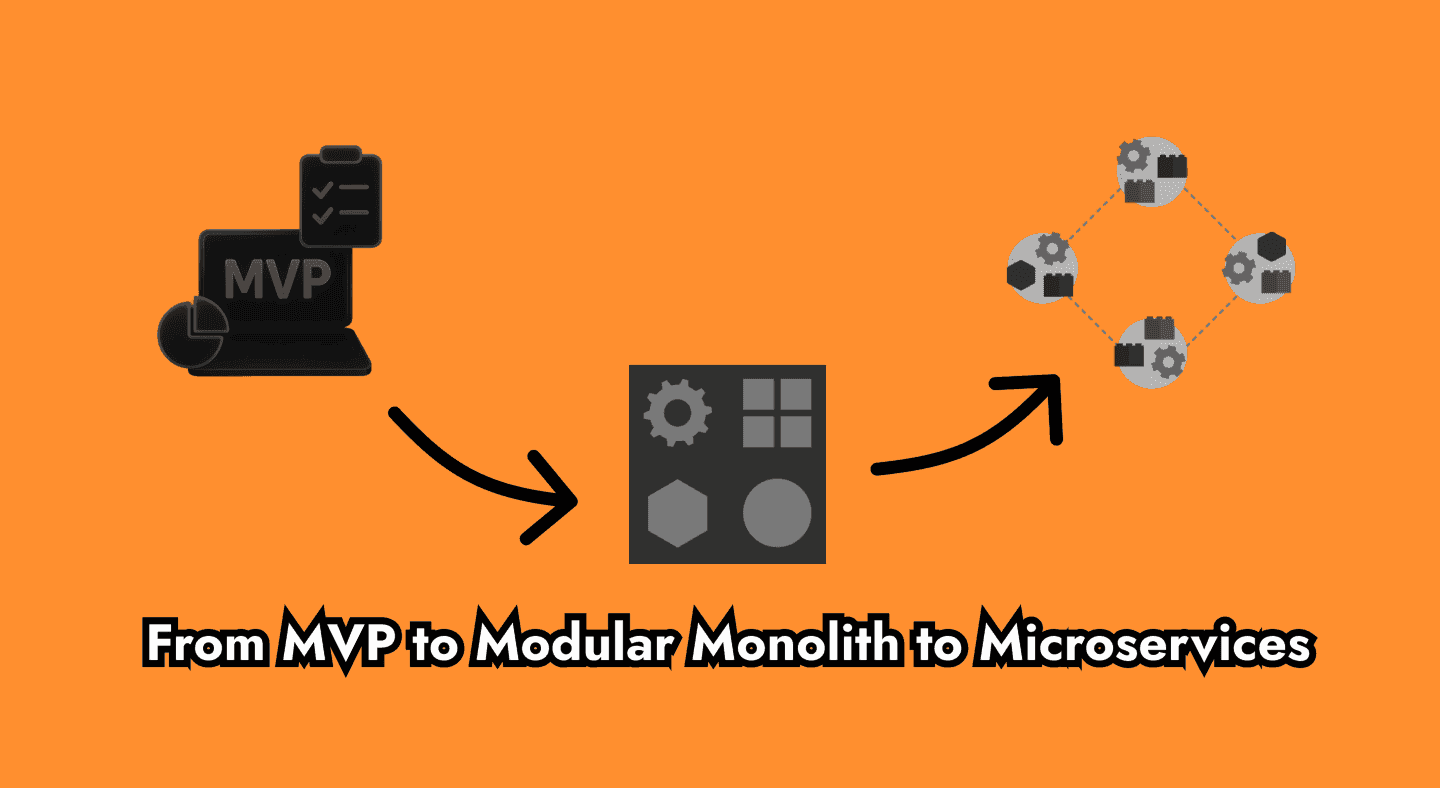
There’s a practical evolution path that many startups and scaling companies have followed: starting with an MVP, moving to a Modular Monolith, and then adopting Microservices. Each of these stages has its own purpose. The MVP phase is all about learning and speed. The Modular Monolith offers some structure and discipline without the headaches of heavy operational management. Microservices come into play only when the demands of scale, team independence, and complexity really require them.
In this article, we’ll explore this journey in more concrete terms, what to build at each stage, when to refactor, and how to recognize the signs that it’s time to evolve to the next phase. This way, teams can improve their architecture without losing the momentum they’ve worked hard to build.
Starting with the MVP
At the MVP stage, the main goal is clear: move quickly and learn even faster. The architecture we choose should help us gather insights rather than stand the test of time. Every decision we make should focus on validating our ideas, collecting real feedback, and making adjustments based on how actual users engage with our product not just how we think they might.
During the MVP phase, it’s all about maximizing what developers can do and how quickly we can gather feedback from customers. The team should aim to deliver just enough features to test our core ideas. Concerns like having perfectly clean code, ideal domain models, or scalability for the future take a backseat. What really matters is speeding up the process from idea to execution to gaining valuable insights.
This is where keeping things simple becomes key. By minimizing layers, services, and moving parts, we reduce the mental burden and make it easier to experiment. A small team should be able to grasp the entire system from start to finish, fix problems efficiently, and roll out changes without unnecessary fuss.
Most MVPs succeed with a single codebase and a monolithic architecture. This typically includes:
One repository
One deployable application
A single relational database
Minimal abstraction layers
Frameworks that focus on convention over configuration, like Rails, Django, Laravel, Spring Boot, and various modern full-stack JavaScript frameworks, have become favorites among teams because they let developers work quickly using smart defaults. Typically, the infrastructure is straightforward too, often just involving a single cloud environment, basic continuous integration and delivery (CI/CD), and a minimal set of operational tools.
This kind of setup keeps things lean and allows for rapid iteration. Changes can be made in one spot, tested quickly, and deployed without needing to coordinate with different teams or services.
However, issues can crop up when an MVP architecture sticks around longer than intended. As teams grow and features keep piling on, the initial simplicity starts to fade. Technical debt accumulates as shortcuts become the norm, making the codebase increasingly difficult to navigate. New team members may find it tough to onboard, and even small changes can lead to unexpected consequences.
Scaling challenges emerge on multiple fronts:
Team scaling: More developers touching the same code paths leads to merge conflicts and coordination overhead.
Performance scaling: A monolithic database and tightly coupled logic limit optimization options.
Complexity: Business logic becomes entangled, making refactoring risky and expensive.
The MVP architecture isn’t wrong; it’s just temporary. The key is recognizing when speed of learning gives way to speed of delivery, signalling it’s time to evolve.
Transitioning to a Modular Monolith
When a minimum viable product (MVP) starts to gain some traction, teams often find themselves at a challenging crossroads. The initial excitement can fade as things begin to slow down. Features that once rolled out quickly now take longer to develop, bugs pop up more frequently, and developers may become hesitant to make changes, worried that they might inadvertently break other parts of the system. It’s common for teams to then leap into the world of microservices, thinking it's the solution to their problems. However, a smarter and less risky approach during this stage might be to adopt a modular monolith instead. This way, you can maintain efficiency and flexibility without the complexities that come with microservices.
What Is a Modular Monolith?
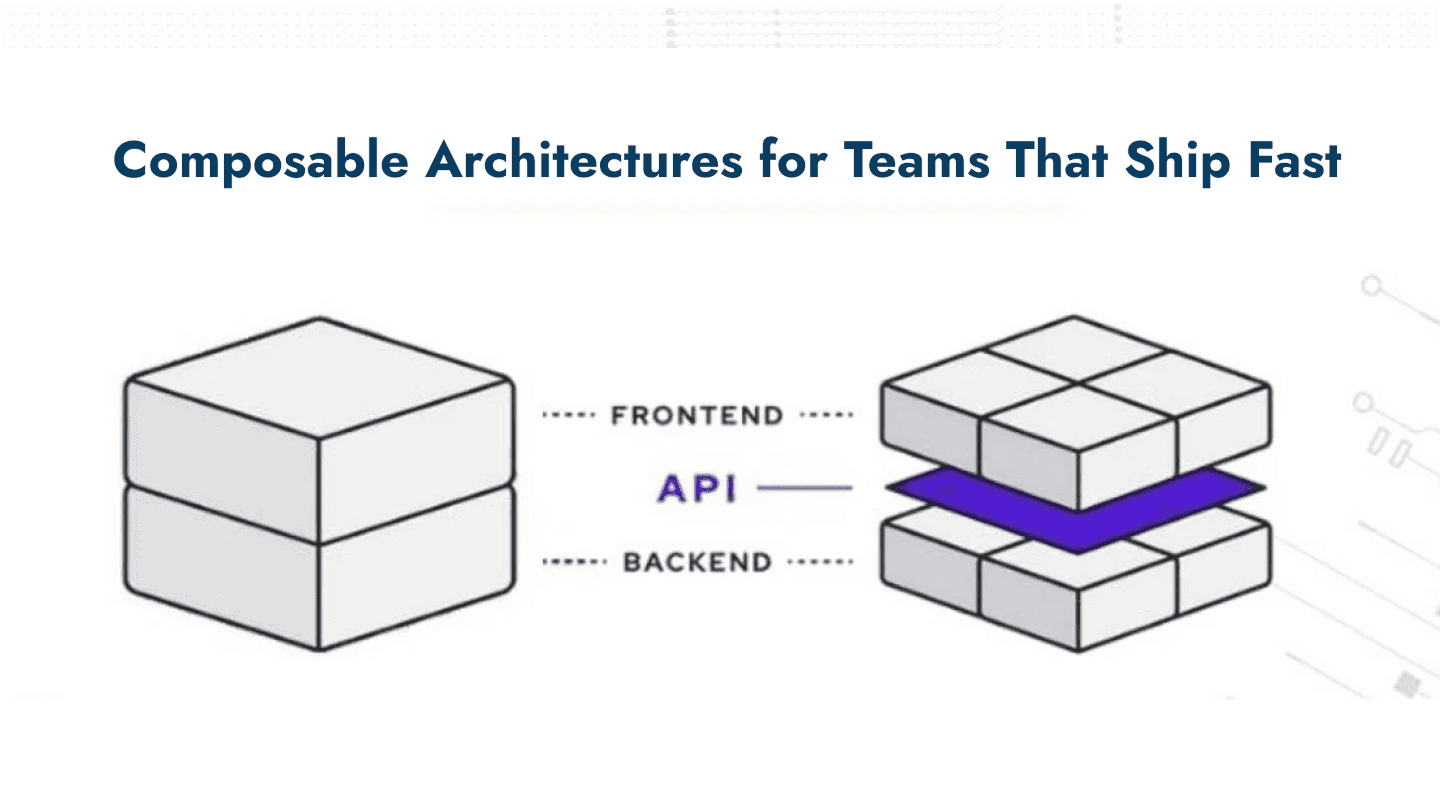
A modular monolith is essentially a single application that you can deploy, but it’s organized in a way that clearly defines different areas of responsibility. This is a big improvement over what we might call a "big ball of mud" monolith, where everything is jumbled together, making it hard to understand and manage. In a modular monolith, each part, called a module, focuses on a specific aspect of the business. Each module has its own unique responsibilities, rules, and internal workings.
The main difference lies in the thoughtful design. The modules communicate with each other through well-defined interfaces, rather than directly sharing code or details. This means that even though everything is deployed together as one application, each module can grow and change on its own without affecting the entire system.
Benefits of Modularization
One of the biggest benefits of modularization is how it helps us tackle complexity. By breaking our code down into smaller, related pieces, teams can make their projects much easier to maintain and test. This approach means that when changes are needed, we can focus on one specific area without constantly worrying about how it might impact the rest of the system.
Modular monoliths also allow different teams to work simultaneously without stepping on each other's toes. Each team can address different modules at the same time, which means less need for constant back-and-forth communication, provided everyone sticks to the established agreements. This setup is a game-changer for organizations looking to grow without getting overwhelmed by the usual challenges that come with distributed systems.
Perhaps the best part about modularization is that it helps us avoid the frustration of diving into microservices too soon. Teams can enjoy the perks of having clear boundaries and ownership over their work, along with the ability to evolve independently, all without having to face the network issues, service discovery headaches, distributed debugging challenges, or the constant battle of keeping data consistent.
Key Practices for Modularization
Successful modular monoliths rely on a few core practices:
Domain-Driven Design (DDD): Use bounded contexts to map business domains to modules. Each module should own its data and logic.
Boundary Enforcement: Enforce module boundaries at the code level using package visibility, dependency rules, or architectural tests. Accidental coupling should fail fast.
Contracts Over Sharing: Prefer well-defined interfaces or APIs between modules over shared libraries and cross-module imports. Shared code should be limited to truly generic utilities.
These practices turn architecture from a convention into a constraint that the system actively enforces.
Teams are typically ready to transition to a modular monolith when:
The engineering team grows beyond a handful of developers.
Feature velocity starts to slow despite increased headcount.
Dependencies between unrelated features become painful.
Refactoring feels risky and time-consuming.
At this stage, modularization isn’t about future-proofing; it’s about restoring development momentum while keeping operational complexity in check.
Moving to Microservices
Microservices often get a lot of hype as the ultimate goal in modern architecture, but they might not be the best starting point for many teams, especially those just getting off the ground. While microservices can provide incredible advantages when you’re scaling up, they also come with a hefty dose of complexity that new teams may struggle to handle. It’s crucial to know when and why to switch to microservices rather than just figuring out how to implement them.
Think of it this way: with microservices, complexity shifts from code to operations. Instead of just working with a single piece of software you can deploy, now there’s a whole ecosystem to manage things like service orchestration, network communication, distributed data, monitoring how everything is performing, and handling failures. This all requires solid CI/CD pipelines, effective monitoring, and a lot of operational know-how.
For a small startup with just two people, diving into Kubernetes, juggling service meshes, and troubleshooting distributed system failures can feel like more of a burden than an advantage. The time and energy spent on managing the infrastructure can easily outweigh the benefits that come from isolating services. At this early stage, microservices can actually slow things down by adding coordination challenges and mental overhead without offering significant rewards.
That’s why many successful teams find that they only move toward microservices after they’ve fully explored the potential of a modular monolith.
Drivers for Microservices Adoption
Microservices become compelling when specific pressures emerge:
Independent Scaling Requirements: Certain components, such as search, payments, recommendations, require different scaling characteristics than the rest of the system.
Organizational Scaling: As teams grow, ownership boundaries harden. Independent deployment becomes essential to avoid cross-team bottlenecks.
Availability and Risk Isolation: When failures in one domain must not impact others, service isolation becomes a business necessity.
At this stage, microservices are no longer an architectural preference; they’re a response to real constraints.
Best Practices for Transitioning
When it comes to transitioning to microservices, starting with a solid foundation in modular monoliths can really help things go smoothly. First, it’s important to pinpoint where your natural service boundaries lie. Look for modules that have a clear sense of ownership, well-defined APIs, and distinct data boundaries. These are your best bets. Ideally, these boundaries should match up with your business domains rather than just being based on technical layers.
A great way to approach this process is by using the strangler fig pattern for extraction. This means that while you build new features as separate services, you can gradually shift the existing functionality out of the monolith over time. By doing this incrementally, you can direct traffic bit by bit, which helps minimize risks and gives you the flexibility to roll back if needed.
Equally important is investing in platform fundamentals before extracting aggressively:
Reliable CI/CD pipelines
Centralized logging, metrics, and tracing
Service-to-service authentication and authorization
Standardized deployment and configuration practices
Without these, microservices amplify chaos rather than reduce it.
Risks and Challenges
Microservices come with their own set of challenges that we can’t ignore. When you're working with distributed systems, they become trickier to manage compared to typical in-process code. For example, if something goes wrong, debugging often means digging through logs from multiple services, which can be quite a task. We also have to deal with network latency and the risk of partial failures becoming a regular part of our operations.
Another concern is the skills gap. Teams need to have a solid understanding of infrastructure, reliability engineering, and how to handle incidents. If they lack this knowledge, it can lead to service sprawl, making systems more fragile and causing team burnout.
On top of that, the costs of coordination rise. Managing APIs means we have to keep track of versioning, and we must adhere to contracts among services. As development evolves, ensuring everyone is on the same page becomes just as crucial as getting the technical details right.
Strategic Decision Framework
Architectural evolution isn't about finding the "perfect" design; it's more about selecting the right architecture that fits where you are at that moment. Teams that are successful in delivering their products regularly reassess their choices, weighing the limitations of technology against the needs of the business. It's a continuous journey of adjustment and alignment.
Before changing architecture, teams should evaluate three dimensions simultaneously:
Dimension | Questions to Ask | Signals |
Team & Org | How many teams are contributing? Do they block each other? | Frequent merge conflicts, coordination overhead |
System Complexity | Are changes localized or cascading? | Tight coupling, risky refactors |
Business Needs | Do certain capabilities require independent scaling or uptime? | Seasonal traffic spikes, revenue-critical paths |
No single signal justifies a shift. It’s the convergence of pressures that matters.
Avoiding Architecture Astronaut Traps
One of the biggest pitfalls many teams face is getting too caught up in perfecting a future that might not even happen. Making early decisions about complex architectures like jumping into microservices, event-driven systems, or Kubernetes can often slow things down and add unnecessary risk without any immediate payoff.
Instead, it’s crucial to ground our decisions in what’s actually happening in the business right now, rather than getting lost in theories about potential growth. The focus shouldn't be on creating a perfect architecture but on delivering consistently.
The best setup is one that allows your team to feel confident in shipping their work today while still keeping an eye on what’s coming next.
Conclusion
When it comes to architecture, there’s no one-size-fits-all solution. The right approach really depends on where you are in your journey, the team you have, and the specific needs of your business. Many teams make the mistake of thinking of architecture as a final destination instead of a series of ongoing decisions that evolve with their growth and challenges.
A common path that works well is moving from a Minimum Viable Product (MVP) to a Modular Monolith and then to Microservices. Starting with an MVP lets you prioritize learning and speed, which is crucial in the early stages. As your project becomes more complex, a modular monolith helps you regain control and maintain your team's momentum. When the need for scaling arises due to organizational demands or critical business needs, that's when you might shift to microservices.
Successful teams don’t jump on the latest architectural trends; they take their time and adapt thoughtfully. They avoid over-engineering things too soon, invest in creating a solid structure when it's needed, and approach microservices with a clear purpose and the right tools in place.
Ultimately, think of architecture not as a one-and-done decision but as a strategic and evolving practice. If you treat it as a living part of your project, it can grow alongside your product instead of holding it back.
Akava would love to help your organization adapt, evolve and innovate your modernization initiatives. If you’re looking to discuss, strategize or implement any of these processes, reach out to bd@akava.io and reference this post.