

Table of Contents
In the high-stakes world of mergers and acquisitions (M&A) and tech investments, conducting thorough due diligence is critical. While financial and legal due diligence often take center stage, assessing the capabilities of the engineering team is equally crucial. After all, in today's digital age, a company's technology and the team behind it can make or break its success.
"The best engineering teams are those that are constantly learning, experimenting, and pushing the boundaries of what's possible." - Satya Nadella, CEO of MicrosoftAs an investor or acquirer, you need to look under the hood to understand the true potential and risks of your target's technical assets. This means diving deep into the engineering team's skills, processes, structure, and technology stack. By conducting a comprehensive engineering team assessment, you can make informed decisions, avoid costly mistakes, and set the stage for post-deal success.
So, what exactly should you assess when evaluating an engineering team's capabilities? Let's break it down.
Technical Skills and Expertise
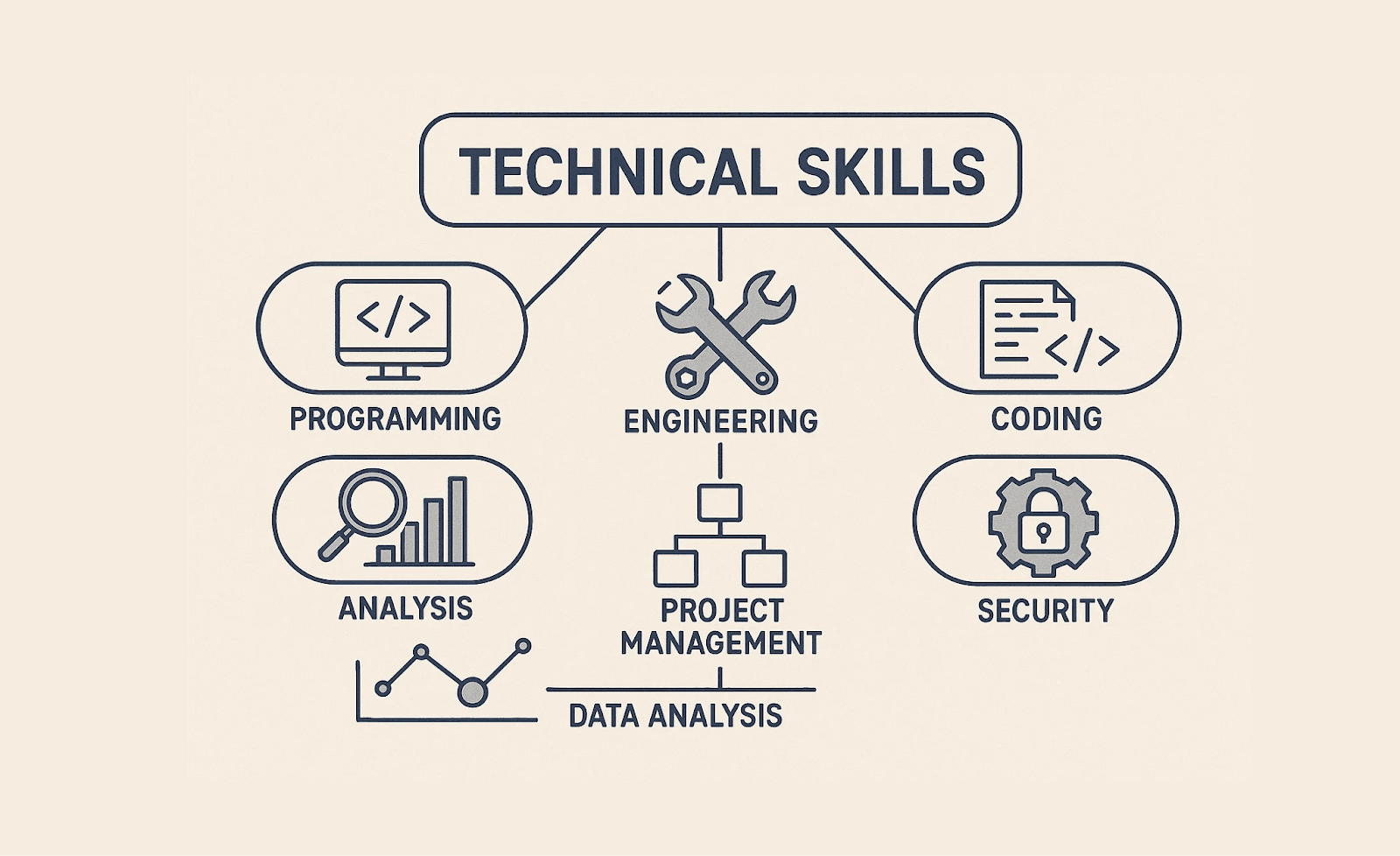
At the core of any engineering team are the technical skills and expertise of its members. Start by understanding the team's proficiency in core programming languages, frameworks, and tools. Are they well-versed in industry-standard technologies like Java, Python, React, or AWS? Do they have specialized domain expertise in areas like artificial intelligence, cybersecurity, or cloud computing?
Pro-Tip: Dig deep into the engineering team's problem-solving approach. Ask them about the toughest technical challenges they've faced and how they overcame them. This will give you valuable insights into the team's technical depth and creative thinking.It's also important to assess how the team stays up-to-date with emerging technologies and trends. A forward-thinking, continuously learning team is more likely to adapt and innovate in the face of rapid technological change. Look for evidence of ongoing training, certifications, and participation in industry conferences or open-source projects.
Engineering Processes and Methodologies
How an engineering team builds software is just as important as what they build. Examine the team's software development lifecycle (SDLC) and the methodologies they follow, such as Agile, Scrum, or Kanban. Well-defined, streamlined processes are a sign of a mature, efficient team.
Continuous integration and deployment are table stakes for modern software development. If a team isn't practicing CI/CD, that's a major red flag. Pay attention to practices like code reviews, testing, and quality assurance. How thorough and systematic are they? What tools and automation are in place to ensure code quality and catch bugs early?
Pro-Tip: Don't just look at the code; look at the commit history. How often does the team ship code? How quickly do they respond to bugs and issues? These are indicators of a high-performing team. A team with strong processes and a focus on quality will deliver more reliable, maintainable software.Also, consider how the team has embraced modern practices like DevOps, continuous integration and deployment (CI/CD), and infrastructure as code. These practices enable faster, more frequent releases and greater agility – key competitive advantages in today's fast-paced market.
Team Structure and Dynamics
Beyond individual skills, assess how the engineering team is structured and how well they collaborate. Is there a clear delineation of roles and responsibilities? How do developers, QA engineers, DevOps specialists, and other roles work together?
Pay attention to how the engineering team collaborates with other functions, like product management, design, and customer support. A siloed engineering team can be a red flag. A well-organized team with effective communication channels is more likely to deliver high-quality software on time.
Consider the team's size and scalability. Is it appropriately staffed for the current workload and future growth? A team that's stretched too thin or reliant on a few key individuals could be a risk. On the other hand, a bloated team may indicate inefficiencies or lack of focus.
In today's global, remote-first world, it's also important to assess how the team collaborates across locations and time zones. Do they have the tools, processes, and cultural norms in place to work effectively as a distributed team? A team that can seamlessly collaborate remotely is well-positioned to tap into global talent pools and operate with greater flexibility.
Technology Stack and Architecture
A deep dive into the engineering team's capabilities must include a thorough evaluation of their technology stack and architecture. Start with an overview of the current technologies in use, from programming languages and databases to frameworks and libraries. Are they using modern, widely-adopted technologies or relying on outdated, niche tools?
Pro-Tip: When assessing a team's technology stack, consider not just what they're using today, but what they're planning for tomorrow. A forward-thinking team will have a roadmap for modernizing and future-proofing their architecture.Assess the scalability, performance, and maintainability of the architecture. Can it handle the expected growth and traffic? Is it modular and flexible enough to adapt to changing requirements? A well-designed, future-proof architecture is a valuable asset.
Also, look for signs of technical debt and legacy systems. Every codebase has some amount of technical debt, but excessive debt can slow down development and increase maintenance costs. Understand how the team manages technical debt and whether there's a plan to modernize legacy systems.
Finally, consider how the team's technology choices align with industry trends and best practices. Are they leveraging microservices, serverless computing, or other modern architectural patterns? A team that stays on the cutting edge of technology trends is better equipped to innovate and compete.
Conducting the Assessment
So, how do you actually assess an engineering team's capabilities? It requires a mix of interviews, code reviews, documentation analysis, and benchmarking.
Start by interviewing engineering leaders and team members. Ask about their processes, tools, and challenges. Get a sense of their technical depth and problem-solving approach. Also, assess their vision and roadmap for the product and technology.
Pro-Tip: The most effective engineering leaders are those who can bridge the gap between technical and non-technical stakeholders. They can translate complex technical concepts into business value and impact.Next, dive into the code. Conduct code reviews to assess the quality, readability, and maintainability of the codebase. Look for consistent coding standards, clear documentation, and well-structured modules. Also, evaluate the test coverage and quality of automated tests.
Review the team's documentation, from architecture diagrams and API docs to onboarding guides and incident postmortems. Well-maintained documentation is a sign of a disciplined, transparent team.
Lastly, benchmark the team's capabilities against industry standards and best practices. Compare their technology choices, processes, and metrics to those of similar companies and industry leaders. This will give you a sense of how the team stacks up and where there's room for improvement.
Competitor Analysis
To fully assess an engineering team's capabilities, it's important to look beyond the company itself and consider the competitive landscape. How does the team's technical expertise and technology stack compare to that of key competitors?
"The most successful companies are those that can attract, retain, and motivate the best engineering talent. It's not just about the technology; it's about the people behind it." -Marc Andreessen, GP at a16zIdentify the company's main competitors and research their engineering teams and technology. Look for areas where the target company has a competitive edge, such as unique technical skills or proprietary technology. Also, identify areas where competitors may have an advantage, such as a more scalable architecture or a more experienced team.
This competitive analysis will give you a better understanding of the company's positioning and potential in the market. It will also help you identify opportunities for differentiation and innovation post-acquisition.
Risks and Opportunities
No engineering team is perfect, and every assessment will uncover both risks and opportunities. It's important to identify and evaluate these thoroughly to make informed decisions.
Don't underestimate the importance of culture fit. An engineering team may have all the technical skills in the world, but if their values and work style don't align with yours, it can lead to friction and failure down the line.
Potential technical risks and red flags could include:
- High levels of technical debt or legacy systems
- Outdated or niche technologies that are hard to maintain or scale
- Lack of automated testing or poor test coverage
- Siloed teams or lack of cross-functional collaboration
- Key person dependencies or high turnover
On the flip side, the assessment may also uncover exciting opportunities, such as:
- Unique technical expertise or intellectual property
- Opportunities to modernize the technology stack and architecture
- Potential to scale the team and technology to new markets or products
- Synergies with the acquirer's existing technology and roadmap
By weighing these risks and opportunities, you can make a more informed decision about the acquisition or investment. You can also plan for post-deal integration and optimization to maximize value.
Pro-Tip: When evaluating an engineering team, I always look for a combination of technical excellence and business acumen. The best teams understand not just how to build great software, but why it matters for the business.Wrap Up
In the world of M&A and tech investing, assessing engineering team capabilities is a critical part of technical due diligence. By thoroughly evaluating the team's skills, processes, structure, and technology stack, you can gain a deep understanding of the company's technical assets and potential.
A comprehensive engineering team assessment can help you:
- Identify technical risks and red flags early in the process
- Uncover opportunities for growth, innovation, and synergy
- Benchmark the team against industry standards and competitors
- Make informed decisions about valuation, deal terms, and post-deal integration
- Set the stage for long-term success and value creation
Of course, conducting a thorough technical due diligence is no easy feat. It requires deep technical expertise, industry knowledge, and experience with M&A transactions. That's why many investors and acquirers choose to work with experienced technical due diligence partners who can provide objective, expert assessments.
If you're considering a tech acquisition or investment, don't overlook the importance of assessing engineering team capabilities. By looking under the hood and evaluating the team behind the technology, you can make smarter, more confident decisions and drive long-term success.
Is your target's software architecture built to last or a house of cards waiting to collapse? Don't leave it to chance. Contact patrick@akava.io for a comprehensive architecture review during technical due diligence. Let our experts help you identify risks, unlock potential, and make informed decisions for your technology investment.